Commercial Waste Removal in Feltham for straightforward business clearances

Commercial waste removal in Feltham needs to be practical, organised and suited to the way a business actually operates. Whether you are clearing a shop unit, refreshing an office, emptying storage, or dealing with mixed general waste after routine maintenance, we focus on removing unwanted materials in a way that helps you keep the day moving. The service is aimed at commercial premises that need a reliable clear-out without turning the process into a disruption.
We handle a range of business waste removal tasks, from single-load collections to more considered clearances that involve sorting different materials into sensible streams. Typical work may include office furniture, packaging, shop fixtures, bulky items, paper waste, and other non-hazardous commercial waste. For specialist or restricted items, the type of material matters, so it is best to approach the job with clear information and a realistic expectation of what needs separating, lifting and loading.
For a quotation, it helps to describe the items, access, and the kind of property involved. A clear list of what needs removing usually gives a much better starting point than a vague estimate. If you are ready to move forward, you can request a quotation once you have the basics to hand, or simply use the service pages below to find the most relevant route for your clearance.
Business waste collections shaped around the premises
Businesses often need waste removal for more than one reason at once. A unit may be clearing stock room clutter, an office might be replacing old furniture, and a shared building may need regular disposal of mixed non-confidential material. Our approach is to keep each collection focused on the actual job, so the work can be planned around what is present rather than forcing every clearance into the same format. That makes it easier to separate reusable items, bulky waste and ordinary refuse.
If you need a broader commercial collection, the business waste removal page is the most direct place to start. It suits workplaces that want a single removal arranged around the contents and access on site. For places where the main task is simply general load-up and disposal, the wider waste removal service can also be relevant when the waste is mixed and the quantity is manageable.
The kind of premises matters because loading points, stairs, shared entrances and parking all affect how the work is carried out. A ground-floor shop with rear access is different from a multi-floor office or a light industrial unit with limited vehicle space. That is why a useful enquiry usually describes where the items are kept, not only what they are. If there are several rooms or storage areas involved, note whether the waste is spread out or already grouped together before removal begins.
Office clearances, desks and general workplace items

Office waste removal tends to involve mixed items rather than one obvious category. Desks, chairs, shelving, filing units, monitors, carpet offcuts and packaging can all appear together when a workspace is being reorganised or closed down. A sensible clearance keeps attention on what can be removed safely and what may need separate treatment. We can help with general office clearances where the aim is to empty rooms, reduce clutter, or take away redundant equipment that no longer serves the site.
The office clearance page is suitable when you want the emphasis to stay on desks, cabinets and other workplace contents. If there are computer-related items, confidential papers or data-bearing materials, then the type of disposal becomes more specific. In those cases, the confidential shredding page is relevant for documents that need secure handling, while non-paper office furniture can still be dealt with as part of a normal clearance plan.
It is often useful to separate office waste into three simple groups before arranging removal: items to keep, items to relocate, and items ready to go. Furniture, paper, and mixed packaging each create different handling requirements, especially where stair access or shared corridors are involved. If you are planning a phased clear-out, we can work through the items in a way that matches the pace of your move, refurbishment or end-of-lease schedule.
Furniture disposal for bulky items and room resets
Commercial furniture disposal is often needed when a workplace, rental unit or public-facing premises changes layout. Chairs, sofas, tables, shelving and reception pieces can all become redundant at once, and their size makes them awkward to leave in place for long. The aim of this service is to take away bulky furniture items efficiently while keeping the process straightforward for the person arranging the clearance. It is especially useful when furniture needs to leave alongside other non-hazardous waste.
Where individual items are the main problem, the furniture disposal page can be used for more focused removals. Larger room-by-room clear-outs may suit the furniture clearance option, particularly when there are several pieces rather than one or two standalone items. For mixed domestic and commercial work, separate service pages can help keep the enquiry accurate and avoid confusion over what belongs to the job.
Furniture removal is not just about lifting heavy objects; it is also about planning the order of work. A small number of oversized pieces may need more attention than a larger number of lighter items, especially if the route out of the building is narrow or shared. When a unit contains both furniture and loose rubbish, grouping items by type before collection can make the removal more manageable and help the clearance feel orderly rather than rushed.
Bulky waste, fixtures and mixed clearances
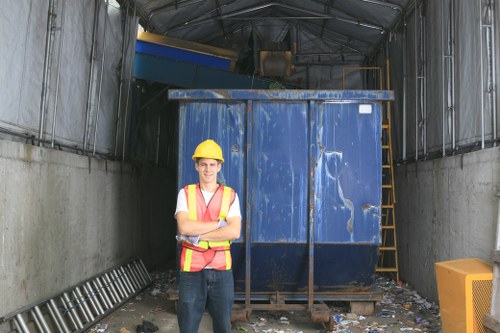
Some commercial clearances are broader than a single furniture or office job. Shop fittings, shelving, display units, boxed stock, packaging waste and assorted bulky items may all need to go together. These mixed clearances are best handled with a practical plan, because the work often starts with identifying what is stacked, what is fixed, and what can be moved without damaging walls, floors or access routes. Our service is built around that kind of mixed commercial load.
If your project includes fixed or semi-fixed fittings, the builders waste clearance page may be useful where renovation debris and trade waste are involved. For premises that are being emptied completely, the home clearance and house clearance pages describe more general clear-outs, while business sites with similar amounts of mixed material may still need the commercial route rather than a domestic one.
Bulky waste usually demands a little more thought than loose rubbish because the size, weight and shape of the items influence how they are taken away. A clearance that includes awkward pieces may need more time for preparation and carrying, while stackable materials are simpler to group and remove. It is helpful to distinguish between items that can be bagged, items that need lifting in one piece, and items that need to be dismantled before collection.
Specialist disposal for appliances, mattresses and awkward items
Not all commercial waste is the same, and some items sit outside ordinary mixed rubbish. Appliances, mattresses and sofa-type items can involve different handling needs because of their size and construction. In practice, that means a careful look at what you have on site and whether the items belong together or need a dedicated route. We keep the service focused on the task in hand rather than treating every load as identical.
For refrigerators, freezers and similar items, the fridge and appliance removal page is the most relevant fit. For sleeping or seating furniture that needs separate handling, the mattress and sofa disposal page offers a more specific route. If the item is still usable in part, or if there are several matching pieces, it is usually best to describe the type and number clearly so the clearance can be aligned with what is actually there.
Special items are easier to manage when they are not mixed in with everything else without explanation. One or two awkward objects can affect the whole loading plan, especially where access is tight or the route involves stairs. If the item is located in a back room, basement, or upper floor, mention that as part of the job description so the collection can be planned in a realistic way. That saves time and avoids uncertainty on the day.
Garage, loft and storage clearances for commercial premises

Commercial sites do not only accumulate waste in public-facing rooms. Garages, lofts, cupboards, store rooms and service spaces often collect old stock, redundant tools, packaging, display materials and long-forgotten equipment. These areas can be awkward to clear because contents are often mixed, stacked or partially hidden. Our clearance service is suited to premises that need these spaces emptied in a sensible order, with attention to access and handling.
The garage clearance page suits spaces used for storage or overflow, while the loft clearance page is useful where the contents sit above the main workspace. Some businesses also make use of the flat clearance option for upper-level or compact premises where items have been left behind and need to be removed carefully. The right page depends on whether the contents are commercial, domestic or mixed.
Storage clearances often work best when the contents are not treated as a single pile. Old packaging, broken furniture, stock boxes and loose waste are easier to deal with when grouped before removal. Practical sorting also helps identify anything that should stay on site. If you are dealing with a locked or rarely used area, it is worth checking that all keys, codes and access instructions are ready before the work starts, so the clearance can move smoothly from one area to the next.
About Feltham
Feltham is a town in west London, in the London Borough of Hounslow, with a long history shaped by its position on routes linking London with Middlesex and the west. The modern town sits close to Heathrow Airport, but it also has older roots visible in the layout of local roads, historic church sites and long-established residential streets. Feltham’s development accelerated in the nineteenth and twentieth centuries, when transport improvements and suburban growth changed it from a more rural settlement into a built-up London community. The area includes a mix of housing, local shopping streets, community buildings and open spaces, giving it a practical everyday character rather than a single central focus. Feltham Green and the surrounding streets form one of the town’s recognisable local landmarks, while nearby open land and parks provide contrast with the denser built environment. The Grand Union Canal runs through the wider vicinity and adds a quiet waterway landscape to a place otherwise closely associated with road links, rail connections and airport-related movement. Feltham railway station remains an important part of the town’s identity, connecting it with central London and neighbouring districts. Over time, the town has absorbed layers of change: older lanes and parish boundaries, suburban estates, post-war redevelopment and the more recent pressures and opportunities of a busy outer-London location. That combination gives Feltham a layered local character, where modern retail, transport infrastructure and domestic streets sit alongside traces of earlier settlement and open space.
Clearance planning that keeps the job organised
Good commercial waste removal depends on a sensible plan rather than guesswork. The most useful enquiries usually explain what is being cleared, where it is located, and whether the items are grouped or spread across the building. If there are photographs, they should support the description rather than replace it. A short inventory can be more useful than a long message because it helps distinguish office furniture from mixed waste, or bulky items from general rubbish, without forcing anyone to interpret vague labels.
Access details also matter, particularly for premises with narrow entries, shared corridors, loading restrictions or upper-floor rooms. When those points are clear, it is easier to decide whether a clearance is straightforward or needs a more careful approach. If you have multiple areas to empty, list them in the order that makes sense on site. You do not need to write a long explanation, but a concise description of the contents and layout gives the quotation request a solid start.
For pricing, the main factors are usually the type of waste, the volume, access, and whether the material needs any special handling. Once those points are known, it becomes easier to request a quotation with confidence. You can also use the service pages already mentioned if you want to match the job to the right category before making contact. Keep it simple, describe the load clearly, and send the details when you are ready.
Commercial clearances for refurbishment, moves and end-of-use items
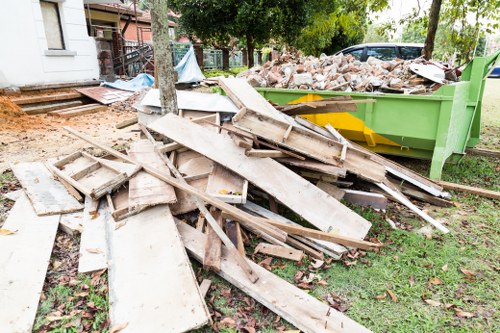
Many commercial waste removals happen because a business is changing something rather than shutting down completely. Refurbishment can leave behind old fixtures, worn furniture, packing material and offcuts. A move may create surplus stock, archive items, or redundant equipment that no longer needs to travel with the business. End-of-use clearances can be even more varied, because the remaining contents may range from reusable pieces to general rubbish that needs sorting before removal.
Where renovation waste dominates the job, the builders waste clearance page is the more appropriate route. If the site is mainly an office environment, the office clearance page remains the best fit, while shops and mixed trade premises may prefer the broader business waste removal option. The useful approach is to match the page to the contents, not to force the contents into a category that does not really fit.
When a business is preparing for a change, the clearance is often easiest if the work is divided into clear stages. Items that are being kept can be moved first, followed by reusable stock, and then the waste that is ready for removal. That sequence helps reduce confusion in the final sweep of a room. If you are comparing options, start with the page that best reflects the materials on site, then ask for a quotation once the scope is clear enough to describe properly.